

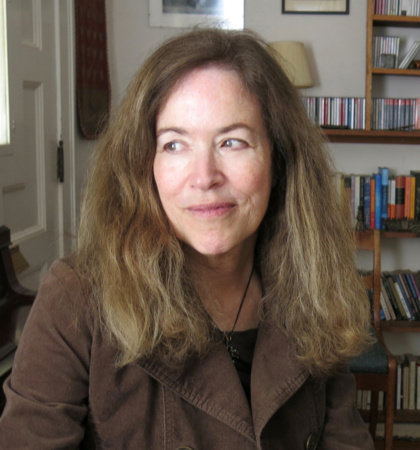
Recap of the September Meeting with Susan Sherman and Elizabeth McKenzie
By Shari Clare
Any time our club hosts members of the Rough Drafts critique group, we know we are in for an informative and entertaining event. Our September meeting was no exception, courtesy of two members of that group, the acclaimed authors Susan Sherman and Elizabeth McKenzie. Their fascinating discussion described both their writing process and the benefits of being in a critique group.
Although each of them approaches writing in a somewhat different manner, they share a few common practices around requesting and receiving feedback. Before submitting their work for critique, they write and re-write thousands of times, until their work has achieved perfection and there’s nothing left to fix. But wait. Even though they can’t see any room for improvement, their years of experience have taught them to be on the lookout for a dreaded disorder: “word-blindness.” After so much rewriting, it becomes almost impossible to see all those carefully chosen words with a fresh set of eyes. And this is where their critique group is of tremendous benefit.
The Rough Drafts engage in a straightforward critique process. When a group member is ready for feedback, they email their pages (any length, from a single chapter to an entire book) to everyone. Each group member reads the pages, sometimes multiple times, and makes note of their reactions or other feedback. When they meet in person (usually twice a month on Sundays) at Susan’s home, they point out what they liked, and make suggestions for improvement. They always have food, as well as time to enjoy the camaraderie of their fellow writers.
Here is some advice from Susan and Elizabeth about the writing life:
- Read widely. The more you read, the more you will understand how other authors have accomplished the goals you have set out for yourself.
- Love what you’re writing. You’re going to spend a lot of time with your characters, and the passion you feel will transfer to the page and be picked up by your readers.
- Edit your own work. Take it to the point where you can’t think of anything else to change.
- Get feedback from your fellow writers. You want actionable advice from people who are with you in the trenches, rather than just praise from well-meaning friends and family.
- Meet in person if at all possible. Zoom is ok when there’s no other option, but it’s a meager substitute for the camaraderie of meeting face to face. It’s also impossible to share food over Zoom.
- Don’t take anything personally. Getting feedback doesn’t mean you’ve done anything wrong, but listening to constructive criticism can take your writing to a new level.
- Trust your instincts. If you get advice that doesn’t resonate, you are free to skip it.
- Embrace the process. Appreciate the days when there is nothing you would rather do than sit at your keyboard and write.